In the fast-paced evolution of industrial automation, maximizing robotic system efficiency and flexibility has become a top priority for manufacturers worldwide. Among key innovations driving this progress, robot tracks (also called linear rails or robotic travel axes) stand out as transformative components. Far beyond mere auxiliary equipment, they redefine robotic capabilities, address fixed workstation limitations, and unlock new productivity levels—making robot reach extension and robotic workspace expansion achievable for diverse industrial needs. This blog explores the core functions, key benefits, and real-world impact of robot tracks—focusing solely on how this critical component elevates automation performance.
What Are Robot Tracks, and Why Are They Indispensable?
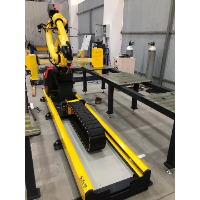
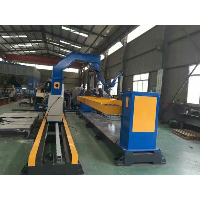
Robot tracks are precision-engineered linear motion systems that mount industrial robots, enabling accurate movement along predefined straight paths. Unlike fixed robots confined to their inherent working range, track-integrated robots gain a “mobile workspace” that expands reach, adapts to dynamic production needs, and optimizes task coverage.
Crafted from high-quality, durable materials, robot tracks withstand industrial rigors—supporting smooth, consistent motion even during 24/7 operation. Typically featuring single-axis servo control, gear-rack drives, and linear guide slides, they ensure precise positioning with minimal friction. Compatible with most industrial robots, they integrate seamlessly, making them versatile for welding automation, automated material handling, assembly, inspection, and packaging applications.
At their core, robot tracks solve a fundamental challenge: even advanced robots are limited by fixed reach. By adding a linear motion axis, they transform static robots into agile systems that handle larger workspaces, complex tasks, and modern manufacturing demands—effectively reducing production bottlenecks.
Key Features of High-Performance Robot Tracks
Premium robot tracks deliver efficiency gains through critical features:
Precision Control: AC servo motors and planetary reducers offer repeatability from ±0.08mm (light payload) to ±0.15mm (heavy payload), making precision servo robot tracks ideal for high-quality tasks requiring consistent positioning.
Durable Build: High-strength, sealed components resist dust, moisture, and wear—minimizing downtime and extending lifespan in harsh industrial settings, a hallmark of heavy-duty robot linear rail designs.
Customizable Design: Adjustable length (enabling long-stroke robot track configurations), variable speeds , and scalable load capacity adapt to diverse needs. Custom robot linear rail options further tailor solutions to specific workspace and task requirements.
Seamless Integration: Ground-mounted installation and standard interfaces enable quick setup with existing industrial automation systems, reducing deployment time.
5 Ways Robot Tracks Enhance Robotic System Efficiency
1. Extend Operational Reach
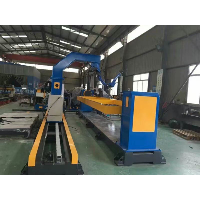
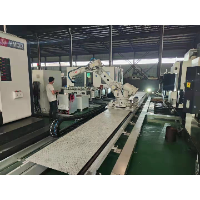
Robot tracks expand a robot’s working range exponentially—one of the most sought-after benefits for handling large workpieces. A robot with a 1.5m inherent reach paired with a 3m track covers over 4.5m, eliminating workpiece repositioning or additional robots. For large-scale tasks like long-seam welding, long-stroke robot tracks enable single-pass coverage of entire workpieces, streamlining workflows and reducing redundancy. This robot reach extension is a game-changer for industries like shipbuilding and heavy machinery.
2. Boost Productivity & Cut Cycle Times
Tracks eliminate fixed workstation bottlenecks with smooth, continuous motion—directly addressing the need to reduce production bottlenecks. Robots move seamlessly between tasks, reducing cycle times by 25-40%. High-speed robot track capabilities (up to 40,000mm/min) and quick positioning boost throughput for high-volume lines—completing more tasks per shift without sacrificing quality. This efficiency gain is critical for meeting tight production deadlines in competitive markets.
3. Improve Consistency & Reduce Defects
With repeatability as tight as ±0.08mm, precision robot tracks eliminate variations from manual intervention. For critical tasks like welding or precision assembly, this ensures uniform output, cuts rework costs by up to 50%, and meets strict industry standards. Smooth motion prevents vibration, enhancing quality and reducing mechanical failure risks—key for maintaining product reliability.
4. Optimize Workspace Utilization
Space-constrained factories benefit from track-enabled consolidation: one mobile robot handles multiple tasks (e.g., welding, assembly, inspection) across a linear path, replacing multiple fixed robots. Their compact, ground-mounted design maximizes usable area, streamlining factory layouts and reducing capital expenditure. This robotic workspace expansion is especially valuable for small to mid-sized manufacturing facilities.
5. Minimize Labor Dependency & Enhance Safety
Tracks enable 24/7 unattended operation, reducing reliance on workers for repetitive or strenuous tasks. They eliminate manual repositioning of heavy components—lowering injury risks, cutting labor costs, and ensuring uninterrupted production during staff shortages or peak demand. For automated material handling of large or heavy loads, heavy-duty robot linear rails provide the stability and capacity needed for safe, efficient operation.
Real-World Impact
Welding: Automotive factories use robot tracks for large workpiece welding, enabling long-seam welding of chassis components in one pass. The long-stroke robot track design reduces cycle time by 30% and improves weld uniformity, meeting strict industry quality standards.
Material Handling: Logistics facilities cut transport time by 40% with heavy-duty robot linear rails, moving heavy packages efficiently across warehouses while maintaining precision and safety.
Assembly: Electronics plants reduce task changeover by 35% and lower defect rates from 5% to 0.3% with precision servo robot tracks, as integrated robots handle multiple assembly stations seamlessly.
Choosing the Right Robot Track
When focusing on robot track selection, prioritize key robot track specifications that directly impact efficiency:
Load Capacity: Match robot track load capacity to robot weight, payload, and tooling (light tracks for welding robots, heavy-duty robot linear rails for large-component handling).
Precision: Opt for ≤±0.1mm repeatability for high-accuracy tasks like precision assembly or welding.
Length & Speed: Customize to workspace size (long-stroke robot track for large areas) and robot motion capabilities, selecting high-speed robot track options for high-throughput lines.
Durability: Prioritize sealed, robust designs for harsh environments (e.g., welding, heavy industry) to minimize maintenance and downtime.
Customization: Explore custom robot linear rail solutions for unique workspace or task requirements, ensuring a tailored fit.
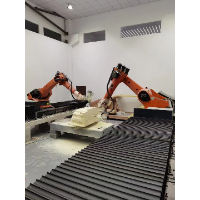
Conclusion
Robot tracks are critical for enhancing robotic system efficiency—transforming fixed robots into agile, high-performance assets. By enabling robot reach extension, boosting productivity, improving consistency, optimizing space, and enhancing safety, they deliver tangible benefits that drive profitability and competitiveness. Whether you need a heavy-duty robot linear rail for large workpieces or a precision servo robot track for delicate assembly, the right solution aligns with your unique operational needs.
For manufacturers aiming to handle larger workpieces, cut cycle times, or reduce labor dependency, investing in a high-quality robot track is a strategic, long-term decision. As industrial automation evolves, robot tracks remain key to unlocking robotic systems’ full potential.
Ready to elevate your automation efficiency? Explore precision-engineered robot track solutions—including custom robot linear rail options—Contact us today.
 Case Study: Successful Implementation of Robotic Positioners in Automotive Manufacturing
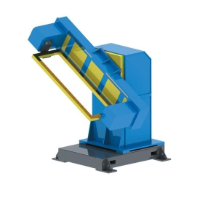 Future Trends in Robotic Positioners and Automation Systems
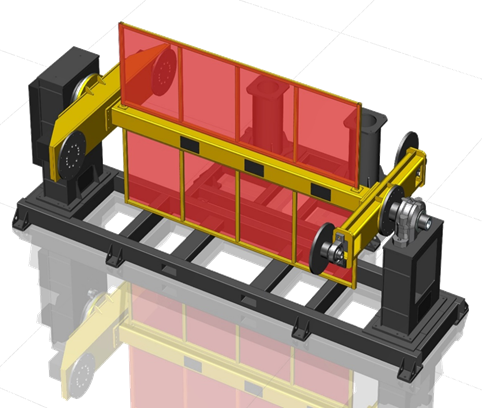 Common Challenges in Implementing Robotic Positioners and How to Overcome Them
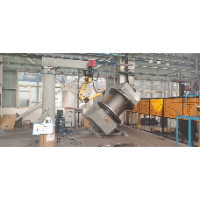 Integrating Robotic Positioners and Gantry Systems for Optimal Automation
